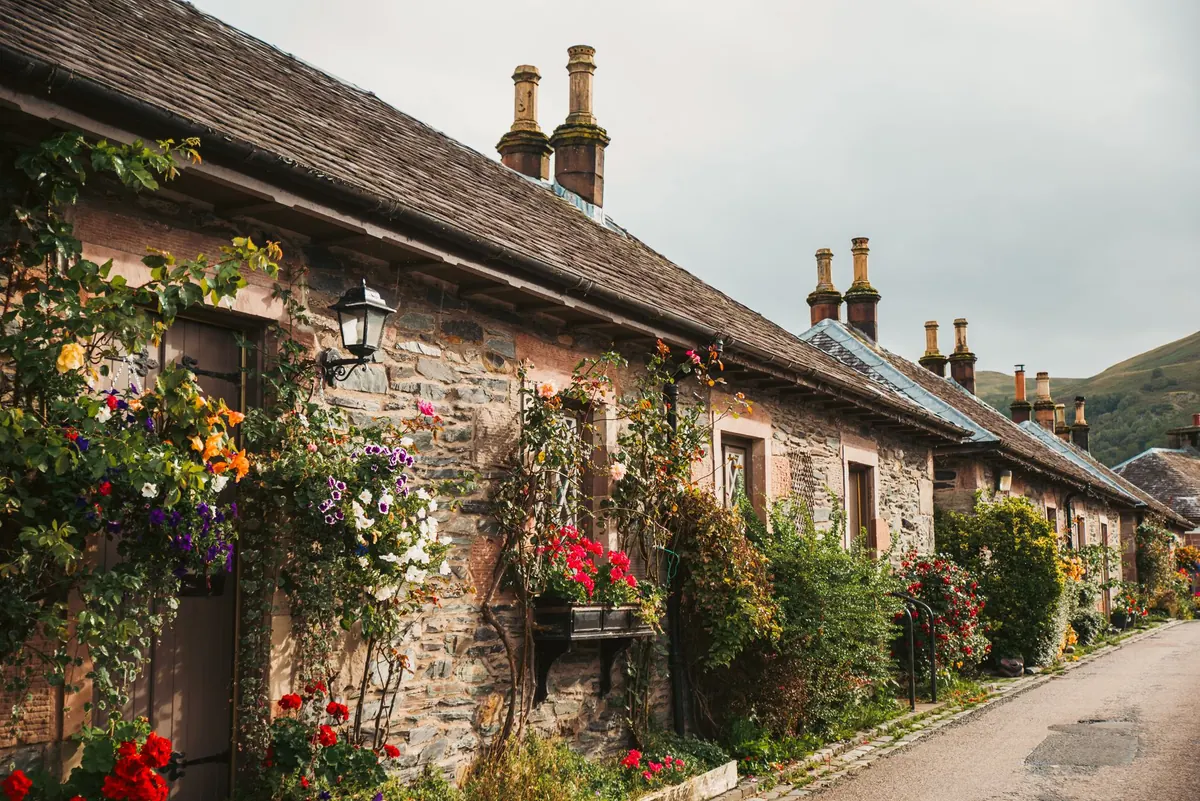
The wide shot of the cottages at Bibury has been made a few million times. It is a fine photograph, and it is also finished; there is nothing left in it that a newcomer can add. The door handle, though, or the way rain runs down a limestone sill, or the six inches of planting between a doorstep and a gravel path — those still have room in them. Detail work is where Cotswold photography rewards patience rather than luck.
Read the Light Before You Read the Building
Most people arrive, see a pretty door and start shooting. Better to spend two minutes working out what the light is doing. Flat, bright overcast suits detail work beautifully: it opens up shadow, holds texture in pale oolitic limestone, and lets you keep the whole of a wall in play. Low, raking sun is the opposite pleasure — it catches tool marks, drystone joints, the ridges in weathered oak — but only on the surfaces it actually hits.
Midday sun is not the enemy either. Hard light makes crisp shapes on stone and throws strong shadows through a window onto a wall, which can be the whole picture. What it will not do is flatter a scene that has nothing structural going on. Golden hour, the conventional choice, often turns Cotswold stone the colour of orange squash, which reads as a postcard rather than a photograph. If you use that light, use it for direction, not for warmth.
Rain is underrated. Wet stone darkens and deepens, paint colours saturate, and a damp doorstep against a dry wall gives you a division between textures that dry weather never provides. Go out just after a shower, when the light comes back and the water is still standing.
Doors: Shape, Wear and Thresholds
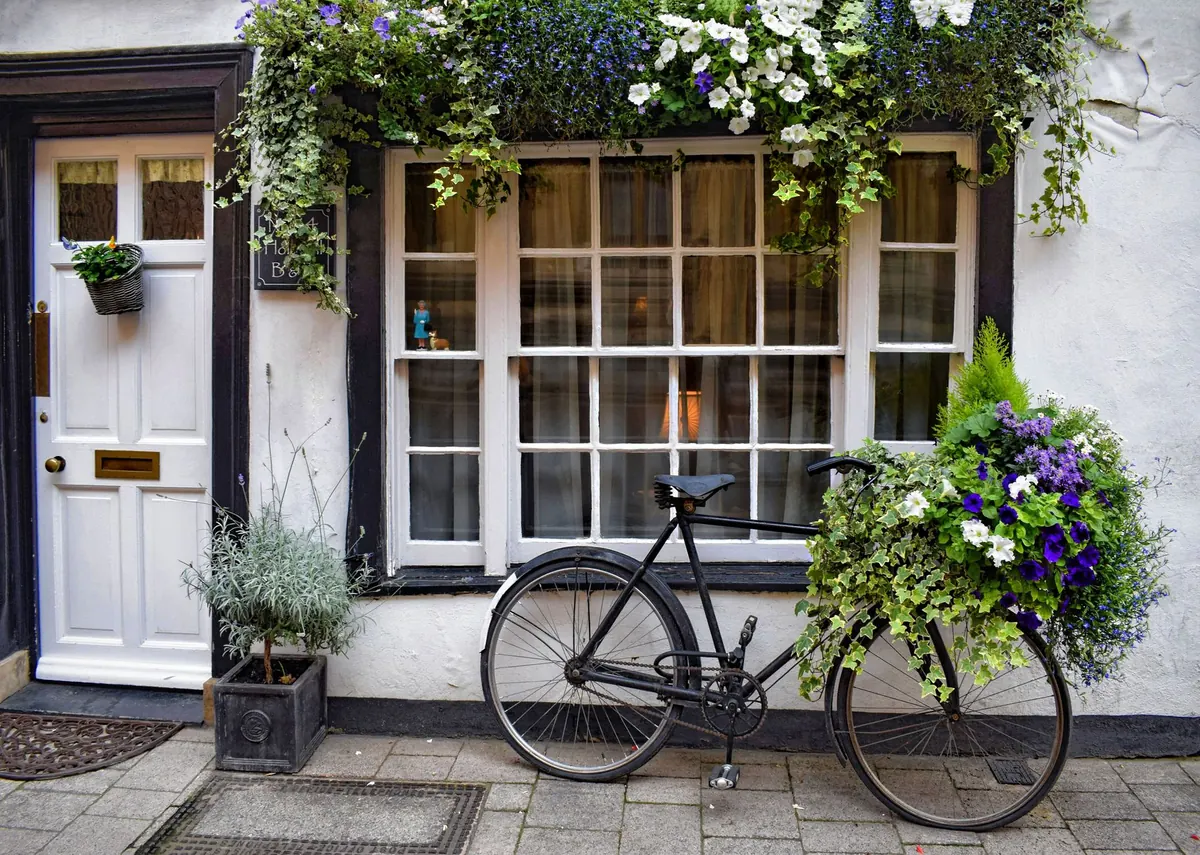
A cottage door is a rectangle, and rectangles are easy to get wrong. Stand square to it and shoot from about handle height, keeping the frame parallel to the door so the verticals stay vertical. Telephone-box perspective — leaning back and tilting up — only works if you mean it. If you are unsure, take one square version and one deliberate tilt, then choose later.
Focal length matters more than most people expect. A 35mm or 50mm lens on a full-frame body lets you stand far enough back to include a step, a boot scraper, a mat or the edge of a planter without the door feeling squeezed. A short telephoto around 85mm compresses the approach nicely and keeps you out of the hedge.
Then look for time. Paint worn thin at the latch. A hand-forged hinge with rust in the folds. A letterbox polished by decades of fingers. A keyhole plate screwed on slightly off-centre. These are the details that separate a photograph of a door from a photograph of this door.
Windows: Glass, Reflections and Frames
Glass gives you two pictures at once, and you have to choose between them. Either the window is a subject — mullions, leaded panes, wavy hand-made glass, stone surround, the small pots on the sill — or it is a mirror, throwing back sky, a tree, the wall opposite. You cannot usually have both, because a reflection bright enough to add something is also bright enough to obscure what is behind it.
Change your angle to control which one you get. From straight on, you photograph your own reflection; step two metres to the side and the glass goes dark and the interior starts to appear. A polarising filter helps, but use it carefully: it can kill the very reflection you wanted, and on stone it can look slightly metallic.
Watch the small architecture around the opening. A drip mould, a keystone, an uneven row of slates, the way a sill has been worn into a hollow by centuries of water. Frame the window so one edge runs out of the picture; a little crop gives the eye somewhere to go.
Gardens: Work With What Grows There
Do not tidy. The instinct to shift a pot or pull a weed out of frame is usually wrong, because the disorder is the charm. Instead, choose your vignette: lavender crowded against a step, a rose trained over an arch, moss in the joint between wall and paving.
Wind is the enemy of garden close-ups. Wait for a still moment, raise your shutter speed, or accept softness in the leaves and keep the wall sharp. Morning dew is worth the early alarm, and so is the flat shade of an east-facing border before the sun swings round. Never step into a bed to get a better angle, and never open a gate to photograph someone's private garden without asking first.
Kit, Settings and Field Craft
- Lenses: one 35mm or 50mm, plus an 85mm or 100mm if you have it, covers almost everything.
- Aperture: f/5.6 to f/11 for detail. Wider loses the corners; narrower softens everything through diffraction.
- Exposure: meter for the pale stone, not the shadows. Around minus half a stop keeps texture in the highlights.
- Support: brace against a wall, use a monopod in narrow lanes, or a small tripod you can set up quickly.
- Bring: a microfibre cloth for rain and fingerprints, and a spare battery in winter.
- Manners: keep doorways, gates and footpaths clear, and move on if a resident appears.
Escaping the Cliché
The cliché is not the subject; there is nothing wrong with photographing a Cotswold door. It is the treatment: uniformly warm, evenly lit, tidied, oversaturated greens, no weather, no season, no human trace. Before each frame, ask what the picture is actually about. If the answer is "it's a nice old door", the frame is probably not finished.
One idea per image is plenty. A single strong element plus a hint of context beats a busy composition of six interesting things. And resist the urge to process the life out of it: keep stone the colour of stone, greens the colour of leaves, and shadows dark enough to mean something.
One Lane, One Hour
If you want to improve quickly, pick a single fifty-metre stretch of village lane and give it an hour. Photograph one door from five positions, one window at three angles, and one six-inch patch of wall or planting until you find the frame that works. Change your height, not just your lens.
Detail photography around Cotswold cottages is largely an exercise in paying attention, and it is also an exercise in respect. These are people's homes, not sets. Work quietly, stay on the road, and if someone comes out to ask what you are doing, tell them and show them the frame. You will usually get a better photograph, and sometimes a suggestion about a doorway two streets away that you would never have found alone.