7 Common Mistakes in Cotswold Landscape Photography and How to Fix Them
The Cotswolds reward patience more than gear. Honey-coloured limestone, dry stone walls, beech hangers and narrow valleys that hold mist until mid-morning: the ingredients are all there, and yet plenty of otherwise good photographs from the region look flat, crowded or slightly wrong. Usually it isn't the camera. It's one of seven habits that are easy to break once you've noticed them.
Here are the mistakes that keep coming up in work shot around Bibury, Castle Combe, Snowshill and the escarpment above Broadway, along with the fix for each.
1. Shooting Only in the Middle of the Day
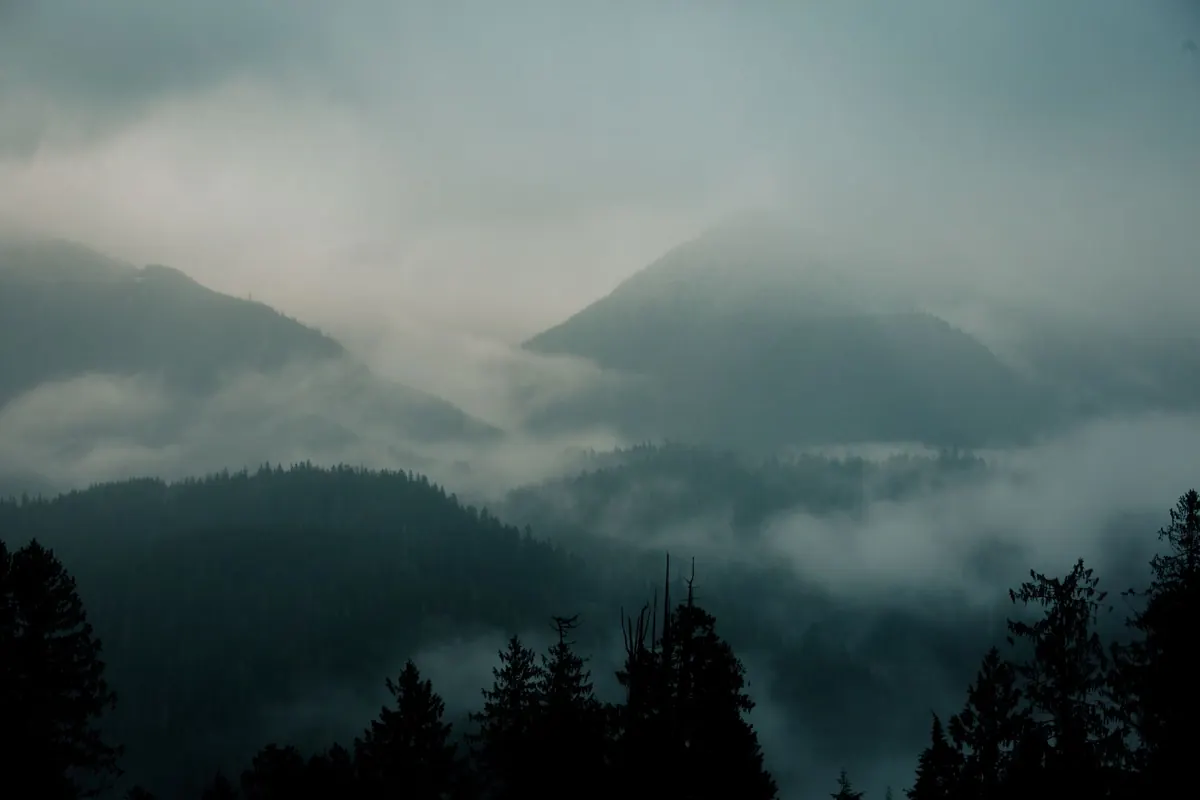
Limestone is a reflector. At midday, light bounces off walls and cottages and flattens everything: the stone reads as pale grey, shadows go hard and short, and the greens in a valley like the Coln lose their depth. The same lane at seven in the morning looks like a different place.
Plan around three windows:
- First light to about an hour after sunrise — best for valley mist, empty villages and long shadows across ridge-and-furrow fields.
- Late afternoon into sunset — side light rakes along dry stone walls and pulls texture out of the stone.
- Flat overcast — genuinely good light for bluebell woods in late April, church interiors, and close studies of walls, gates and lichen.
Midday is for scouting, not for the shot you came for. Walk the location, note the compositions, return when the light turns.
It also helps to think about which way a village faces. Arlington Row at Bibury catches gentle early light on its stone roofs, while many of the best views in Castle Combe are softer in the afternoon or under cloud. The Coln valley often holds mist until well after sunrise, so a dawn arrival may reward you with nothing at first — then everything at once. Give the light time to move, and don't leave the moment the sun clears the ridge.
2. Copying the Postcard Composition
Arlington Row from the footbridge. Castle Combe from the bridge by the market cross. Bourton-on-the-Water from the little stone bridge. These views are famous because they are beautiful, but the picture has already been made many times over. Take your version — then move on.
Shoot the classic frame quickly, then give yourself twenty minutes to find something else within a few hundred metres. A longer lens helps. Instead of the whole row, isolate one doorway, two windows with geraniums, or a reflection in the mill race. Look for the frame within the frame: shot through an arch, between gateposts, past a yew hedge. That's how you leave with a photograph that's yours rather than a replica.
Three frames in twenty minutes
- The classic. Make the obvious shot first, before the light changes or the crowds arrive. It clears your head and gets the pressure out of the way.
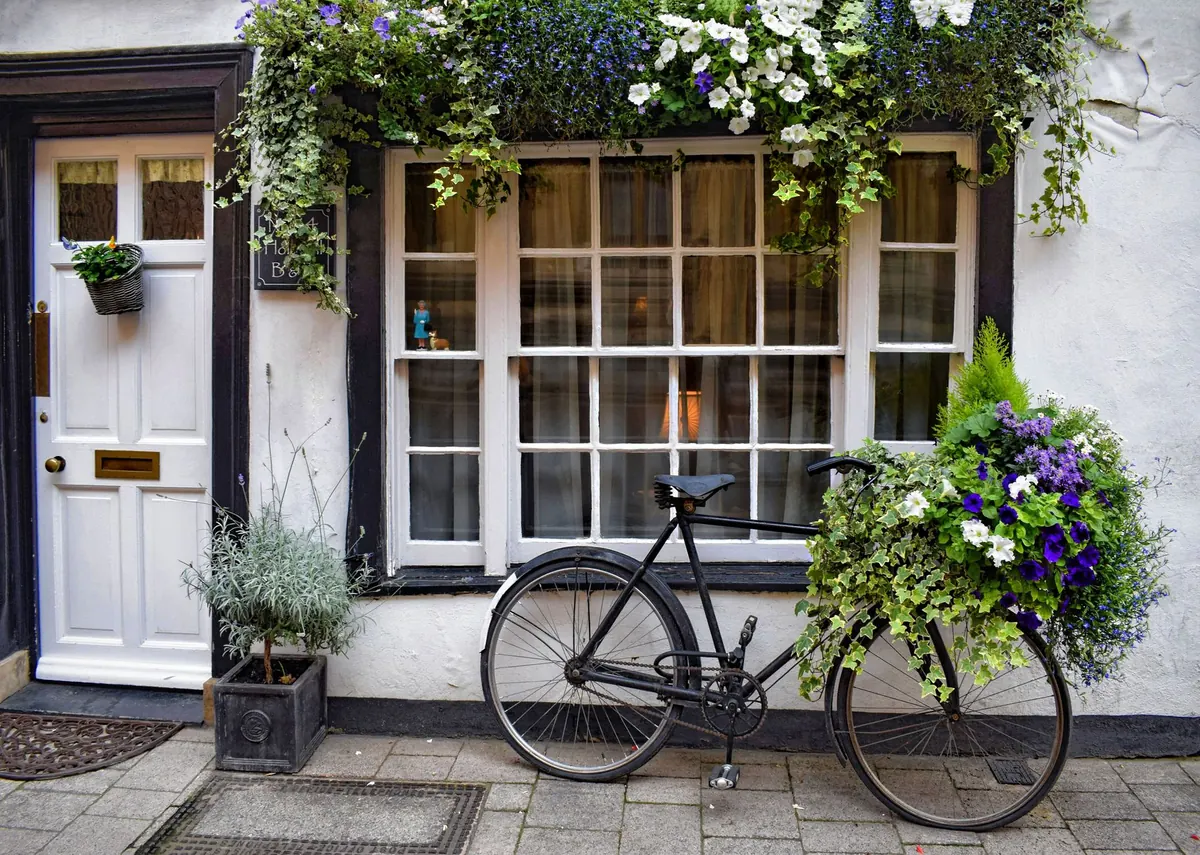
- The detail. Move in close: a worn stone step, a rusted iron gate, ivy on a wall, a bicycle leaning against limestone. These smaller scenes often carry more of the Cotswolds than another wide view.
- The frame within a frame. Use a doorway, an arch, a gap in a hedge or a stone bridge to enclose the scene. It adds depth and makes the familiar feel newly seen.
3. Blown Skies and Dead Horizons
Sunlit Cotswold stone is brighter than most people expect. Expose for it and the sky above turns white; expose for the sky and the village goes muddy. It's the most common technical fault in landscape pictures from the region.
Expose for the highlights and watch the histogram for clipping. Bracket two or three frames and blend them later, or use a graduated ND filter if you prefer to get it right in camera. A polariser will deepen a blue sky, but at very wide focal lengths it can darken one side of the frame unevenly, so rotate it with care. If the sky is pure white and empty, don't fight it — recompose to leave it out and let the land or a wall carry the picture.
A practical trick is to meter for the brightest sunlit wall in the scene, not for the overall average. Then check the histogram: if the highlights are bunched against the right edge, reduce exposure slightly and let the shadows fall where they may. On a bright day at Castle Combe, the white sky above the bridge can be three or four stops brighter than the stone. No sensor will hold both perfectly, so decide which matters more. Often the better answer is to wait for a cloud, shoot into shade, or return when the light is lower.
4. Going Wide and Ending Up With a Lot of Grass
A 16–35mm lens is tempting on the escarpment above Broadway or up on Cleeve Hill, where the view seems to demand it. The result is often a vast empty foreground and a village the size of a thumbnail. The Cotswolds are an intimate landscape — hedgerows, walled lanes, streams, cottages — and they photograph beautifully on a longer lens.
Try 70–200mm to compress the layers: a dry stone wall, a beech hedge, a church tower, a ridge behind. If you do go wide, give the foreground a job. A gate, a stile, cow parsley in June, a puddle after rain. And find a line — a footpath, a wall, a stream — that leads the eye in.
Making a wide lens work
- Get low. A low viewpoint gives foreground detail more presence and makes the scale feel intentional rather than accidental.
- Anchor the foreground. Put a stone, a flower, a gatepost or a texture close to the lens so the eye has somewhere to start.
- Use a leading line. A wall, path or stream should carry the viewer from the bottom of the frame towards the village or ridge.
5. Letting Crowds and Cars Ruin the Frame
Bibury, Bourton and Castle Combe get busy. A parked hatchback under the windows at Arlington Row can undo an otherwise lovely frame. Three approaches work:
- Go early. Before eight in summer the villages are close to empty, and the light is better than at any other time of day. Parking is easier, reflections are calmer, and you can stand in the middle of the lane without apology. In winter, first light can arrive after eight, so check sunrise times and dress for the cold.
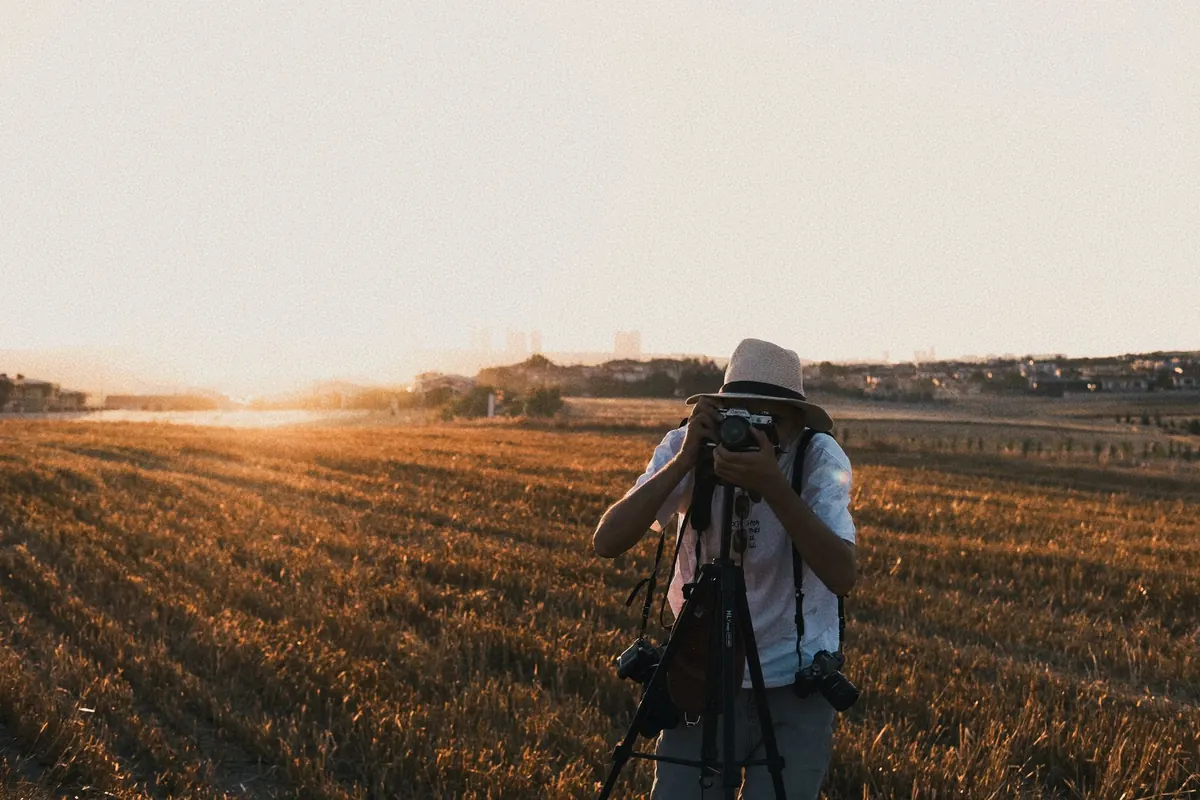
- Wait for the gap. People move, cars eventually drive off, and a little patience often solves the problem. Set up the composition, lock the camera down, and wait. A remote release or interval timer can help. If someone walks through, don't panic — a single figure can add scale and life, but a parked car rarely helps.
- Change your angle or focal length. Move a few steps, shoot through a gateway, go tight on a doorway, or use a longer lens to exclude the car park. Sometimes the best fix is to photograph the village from the footpath above it, where the cars disappear into the pattern of roofs and gardens.
Be respectful while you work. Don't block driveways, gates or narrow lanes, and remember that these are lived-in places, not film sets. A quiet photographer with a small tripod will always be more welcome than one who treats a village green like a studio floor.
6. Ignoring the Season and Weather
Many photographers treat the Cotswolds as a summer destination. In truth, the region changes character every few weeks, and the best light often arrives when the forecast looks doubtful.
Season by season, the opportunities shift:
- Late April and May. Bluebells in the beech woods, cow parsley along lanes, fresh green hedges and long, soft twilights.
- June and July. Lavender at Snowshill, wildflowers on verges, poppies in fields and the deepest greens of the year.
- October and November. Beech hangers turn copper and gold, mist sits in the Coln valley, and low sun rakes across the escarpment.
- December to February. Frost on dry stone walls, bare trees revealing the shape of the land, and low, weak light that flatters limestone.
Weather matters just as much as season. Flat overcast is excellent for woodland and close detail; rain clears the air and leaves wet stone with deep colour; mist is the Cotswolds' great gift to photographers. A clearing storm can produce side light and dark skies at the same time. Check the forecast, but don't be ruled by it. Some of the best mornings are the ones that look unpromising from the car park.
“The Cotswolds are not a landscape of grand vistas but of small, layered scenes. The weather is not an obstacle; it is the subject.”
7. Overprocessing the Cotswold Palette
Cotswold colour is subtle: cream and honey limestone, grey-green lichen, soft blue distance, muted greens. Heavy-handed editing — aggressive HDR, over-sharpening, saturated greens, fake skies — makes it look like a different county. The tell-tale signs are halos along rooflines, crunchy grass, and shadows that are too open to feel natural.
A simple editing order helps:
- Set exposure and contrast. Get the overall brightness right before you touch colour.
- Recover highlights. Bring back detail in bright stone and sky, but stop before the image turns grey and flat.
- Adjust colour gently. Warm the stone slightly if needed, but keep greens restrained. Cotswold greens are often quieter than we remember.
- Use local adjustments. Darken a distracting corner, lift a doorway, or add a little texture to a wall — without global sliders that affect the whole frame.
- Check at 100%. Look for halos, noise and unnatural edges before you export.
If you bracketed, blend for natural light, not for a surreal result. The aim is to make the viewer feel the morning, not to prove you know how to use software.
A Quick Field Checklist
- Time: Have I planned around sunrise, sunset or genuinely useful overcast?
- Light: Is the light doing something kind to the stone, or just making it pale and flat?
- Composition: Have I made the classic shot and then found at least one alternative?
- Exposure: Are the highlights safe, and is the histogram telling the truth?
- People: Can I wait, move, or reframe to remove cars and crowds?
- Respect: Am I leaving the village as I found it, and not blocking anyone's day?
Where to Go When: A Simple Seasonal Guide
- Bibury and Arlington Row: Arrive before eight in summer, or visit in winter when the low sun and empty lanes suit the stone.
- Castle Combe: Early morning for the bridge and market cross; late afternoon for softer light on the cottages.
- Snowshill: July for lavender, autumn for lanes and views towards Broadway; the village itself is best in quiet light.
- Broadway and the escarpment: Sunset for wide views, but use a longer lens to compress the tower, trees and ridge.
- Coln Valley and Chedworth: Dawn for mist, late April for bluebells, and any damp morning for the best atmosphere.
None of these fixes require new equipment. They require a little planning, a willingness to wait, and the discipline to stop copying what has already been done. The Cotswolds are at their best when you slow down, look past the obvious frame, and let the light — not the camera — decide the picture.
Photo: Elif / Pexels